SafeNet Refuge Preston Social Investment Fund Report 2021 - Q2 Outcomes
In May 2021, working with Lancashire Teaching Hospitals Rise Construction Framework announced that it would be supporting the SafeNet Refuge charity in Preston for the second year running.
Established in 1976, SafeNet is a Domestic Abuse (DA) charity delivering support to victims / survivors across the North West. The service is accessible 365 days a year accommodating around 27 women and 27 children at any one time.
In August 2019, working with the University of Central Lancashire Rise funded a Crèche Worker at the refuge so that women with children could attend specialist DA recovery work programmes. The programmes help empower the women to improve, manage and gain an understanding of a wide variety of aspects of their day to day lives. During this time the Crèche Worker was also able to offer additional support to children by developing other activities and specialist sessions.
The role had been incredibly beneficial to the refuge and such outcomes were highlighted within the 2020 Annual Social Investment Fund Report.
In 2021 Rise was pleased to support SafeNet for the second year running helping to create a safer, healthier, and happier future for the women and children accessing the service.
Below is the 2021 Quarter Two Social Investment Fund Report detailing feedback and outcomes achieved during 1st August 2021 to 31st October 2021.
With Covid-19 restrictions finally lifted, Safe Net was able to facilitate more groups in person, which has been hugely beneficial to both the adult and child residents.

Rise Construction Framework - Social Investment Fund
Background
Established in 1976, SafeNet is a Domestic Abuse (DA) charity delivering support to victims/survivors across the North West. The organisation gives support to victims/survivors of DA through 24-hour refuge provision, therapeutic support, re-settlement support as well as Outreach, IDVA services and education. The service is accessible 365 days a year by adults and children affected by DA with refuges across Lancashire and Greater Manchester.
Our Preston refuge accommodates around 27 women and 27 children at any one time.
Women and children fleeing, or living in abusive relationships, are considered to be some of the most vulnerable people in society.
Approximately 70% of all the women coming into Preston refuge in the last three years are mothers. Their children have experienced, lived in or been removed due to domestic abuse and violence. We provide specific group work programmes for women that support their recovery from the impact of abuse and all programmes address the impact on parenting and mother-child relationships.
Our priority project for Preston is an identified need for a dedicated Crèche worker so that women with children can attend specialist DA recovery group work programmes. Funding awarded from the Rise Construction Framework has enabled us to continue employing our part-time Creche Worker.
SafeNet’s Preston DA trained crèche worker responds to all behaviours children may display that are associated with living in abusive households. She works alongside our Children and Young People’s (CYP) Worker providing children with support on a one-to-one basis, directly supporting their personal development and growth.
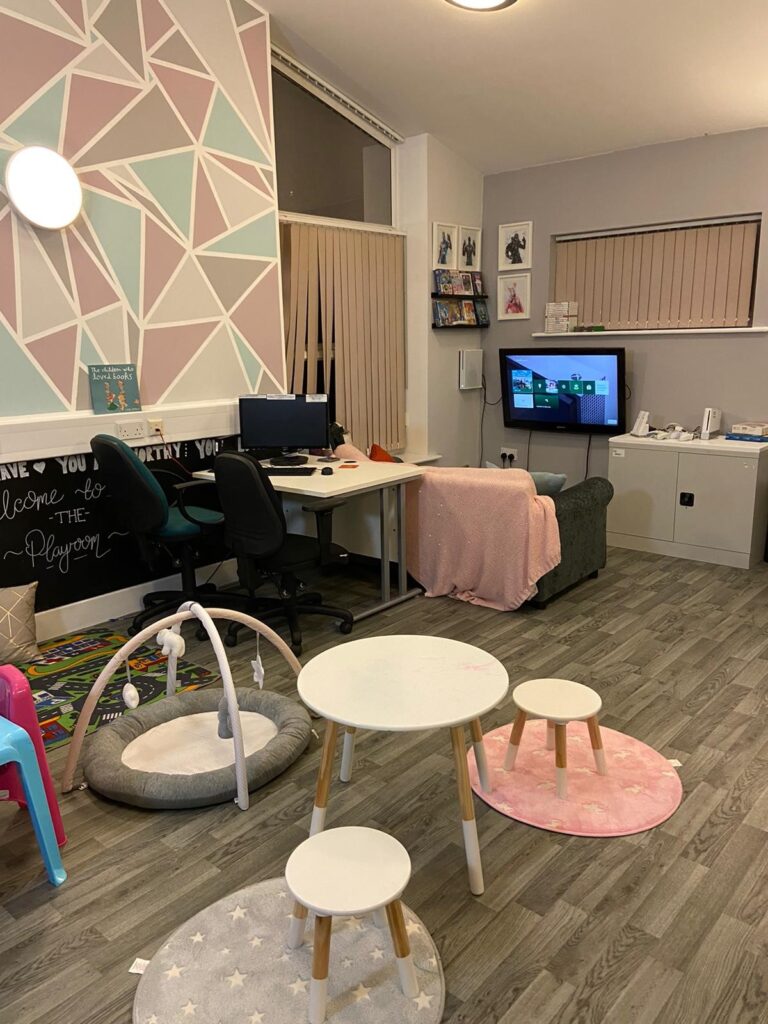
The crèche is provided in the safe and secure environment of the children’s playroom with their mothers nearby during the group work. SafeNet teams are ACEs informed, supporting children in open and non-directive ways to build resilience and develop safe relationships.
Rise Construction Framework Social Investment Fund has awarded SafeNet monies for the sum of £11,325 which will cover a half time Crèche Worker post of 18 ½ hours per week for 12 months. This would enable us to provide a crèche for every group work session ensuring that all women at the refuge are able to attend every session.
Covid-19 update:
All groups and activities are now in person (in line with Government Covid-19 guidelines), which has proved hugely beneficial for the delivery of group sessions to both adults and children.
Adults and children are able to interact directly with each other and make social connections, improving communication and reducing feelings of isolation which have impacted significantly on residents’ mental health and wellbeing.
Groups and activities are more varied and the numbers of people benefiting has increased significantly.
Admissions into the Refuge – 1st August to 31st October 2021
| May-Jul 21 | Aug-Oct 21 | Nov-Jan 22 | Feb-Apr 22 | TOTAL |
Number of Adults with children | 33 | 28 |
|
|
|
Number of Children Supported | 56 | 40 |
|
|
|
*numbers include those resident 1st May 2021 plus new referrals during the period
Children’s Demographics
Gender | May-Jul 21 | Aug-Oct 21 | Nov-Jan 22 | Feb-Apr 22 |
Female | 36 (64.29%) | 27 (67.50%) | ||
Male | 20 (35.71%) | 13 (32.50%) |
Age | May-Jul 21 | Aug-Oct 21 | Nov-Jan 22 | Feb-Apr 22 |
0 – 5 years old | 27 (48.21%) | 24 (60.00%) | ||
6 – 10 years old | 21 (37.50%) | 13 (32.50%) | ||
11 + years old | 8 (14.29%) | 3 (7.50%) |
Ethnicity | May-Jul 21 | Aug-Oct 21 | Nov-Jan 22 | Feb-Apr 22 |
White British | 30 (53.57%) | 28 (70.00%) | ||
White European | 6 (10.71%) | n/a | ||
Arab | 4 (7.14%) | n/a | ||
Asian Other | 2 (3.57%) | n/a | ||
Asian Indian | 4 (7.14%) | 1 (2.50%) | ||
Asian Pakistani | 9 (16.07%) | 8 (20.00%) | ||
Black | n/a | 2 (5.00%) | ||
Mixed Ethnicity | 1 (1.79%) | 1 (2.50%) | ||
Total BME | 26 (46.43%) | 12 (30.00%) |
|
|
Needs identified at Initial Assessment | % |
Mental Health Needs | 33.33% |
Educational Needs | 50.00% |
Safety Needs | 33.33% |
Relationship Needs | 44.44% |
Current Residents
| 31 Jul 21 | 31 Oct 21 | 31 Jan 22 | 30 Apr 22 | Average |
Mums currently in refuge | 19 | 19 | |||
Children currently in refuge | 32 | 36 |
|
|
|
Groups provided to residents 1st August to 31st October 2021
Due to COVID-19, Group Workers had been facilitating group work by methods, such as over Zoom or in very restricted numbers. With restrictions lifting, staff have re-introduced groups in person gradually while aiming to still keep residents, their children and staff safe.
Groups provided for adults where Creche for children is provided:
You & Me, Mum |
|
You and Me, Mum aims to empower and support survivors in furthering their understanding of their role as mothers and in addressing the needs of children and young people who have lived with domestic abuse | |
Number of sessions during this period | 3 |
Number of Residents attended overall | 4 |
Number of children attending the crèche | 8 |
Hope2Recovery | |
Hope2Recovery is a programme for any adult who has or is experiencing domestic abuse. The programme uses a psycho-educational approach and therefore avoids triggering or re-traumatising participants. It is evidence-based and gender-neutral and can be used to support anyone experiencing abuse. | |
Number of sessions during this period | 10 |
Number of Residents attended overall | 9 |
Number of children attending the crèche | 14 |
Resident meetings/House meetings/Key Working |
|
Resident meetings and key working sessions are available to all the women admitted to the refuge. It is often not appropriate for children to be in attendance, so the creche worker provides a creche facility for these children during these sessions. | |
Number of adults with children supported | 15 |
Number of children supported | 23 |
Groups provided for Children and Young People
Wellbeing Sessions |
|
Wellbeing sessions for children, including slime play, outdoor play, healthy relationships | |
Number of sessions during this period | 4 |
Number of children attending the sessions | 14 |
Sensing Me |
|
Wellbeing sessions for very young children | |
Number of sessions during this period | 4 |
Number of children attending the sessions | 5 |
Arts & Crafts Sessions |
|
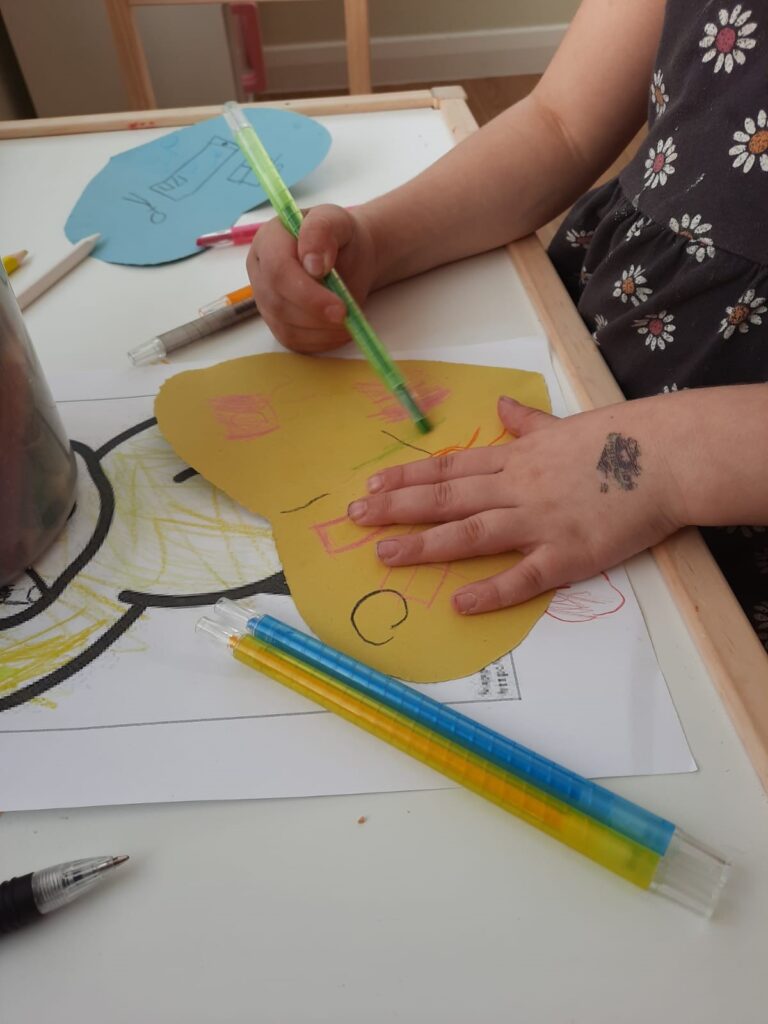
Arts & Crafts sessions for children, including painting, craft sessions, Lego Club, Design Your Own Costume (Halloween), personalised letters | |
Number of sessions during this period | 5 |
Number of children attending the sessions | 22 |
Empowerment Workshops |
|
Empowerment Workshops are structured sessions for children to build confidence, improve social interaction and give them space to express themselves | |
Number of sessions during this period | 4 |
Number of children attending the sessions | 8 |
Residents Contributing to Service Development
Finding Our Voice |
|
Finding Our Voice resident groups put residents at the centre of the organisation’s developments. The group meets regularly and plans resident-led service provision, bringing residents needs to the forefront and identifying how emerging needs can be resourced We are also looking to re-introduce Finding Our Voice for Children and Young People to be able to give their feedback about their support and experiences in refuge. Scheduled for Beginning 2022 | |
In addition to crèches provided for adult group programmes the Children’s Worker has also facilitated various family activities and specialist children’s groups
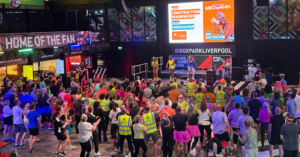
Trip to Trampoline Park |
|
Trip to Trampoline Park – one-off outing for children and adults as a fun activity and to promote wellbeing after 18 months of Covid Lockdown | |
Number of children attended | 18 |
Number of adults attended | 7 |
The Crèche Worker has been DA trained and is able to respond to all behaviours children may display that are associated with living in abusive households
Dedicated DA Crèche Worker has: |
|
· Facilitated children settling into creche by holding smaller or shorter sessions – some children find it very difficult to be separated from mum initially, so the creche worker will adapt their support to provide a positive experience | |
· Worked with various external agencies to support both parents and children – these include social services, midwives, health visitors, nurseries and schools | |
· Liaised with specialist agencies to provide support for more complex needs – these include safeguarding officers and Barnardos | |
Client Feedback
Client Feedback: |
|
· “I feel safe. I know more about the different types of abuse which I was not aware of before coming to the refuge…I am financially independent. I am receiving emotional and practical support” | |
· “I have developed my confidence. I am now able to make friends and I can speak to my family. I can now live independently free from abuse and am able to make my own choices” | |
· “My perspective on particular things has massively improved. I feel better able to parent my children and feel confident in asking for help when I need it” | |
Outcomes
During 1st August to 31st October 2021, 17 residents have left the refuge.
Providing the crèche enables parents to attend Groups and Programmes, empowering the women to improve, manage and gain understanding of a wide variety of aspects of their day to day lives
SafeNet approaches a client’s Domestic Abuse recovery holistically and prioritises trauma-informed support. We recognise that someone suffering from domestic abuse may also struggle with other aspects of their life. Consequently, all residents within refuge have an individual Support Plan to address these issues.
We monitor a range of Outcomes via an Exit Assessment, for example:
Adult Outcomes as a result of support at the refuge: |
Health Outcomes |
81% of adults achieved positive health outcomes, including being better able to manage their mental and physical health, having improved positive coping strategies and experiencing a reduction in symptoms of trauma and anxiety |
Safety Outcomes |
88% of adults left the refuge feeling safer than when they arrived |
Wellbeing Outcomes |
75% of adults felt their ability to deal with problems had improved |
94% of adults felt their confidence had improved after support |
Social Relationships Outcomes |
88% of adults felt their experience of feeling close to others had improved |
88% of adults stated that their support networks had improved |
Recovery from Domestic Abuse |
80% of parents felt their parenting skills had improved and that they understood more about the impact of domestic abuse on their children |
100% of adults felt that they were better able to recognise the signs of domestic abuse and that they would now be more confident in asking for help if they needed it |